Critical Thinking eBook: Brain Teasers for Better Decisions
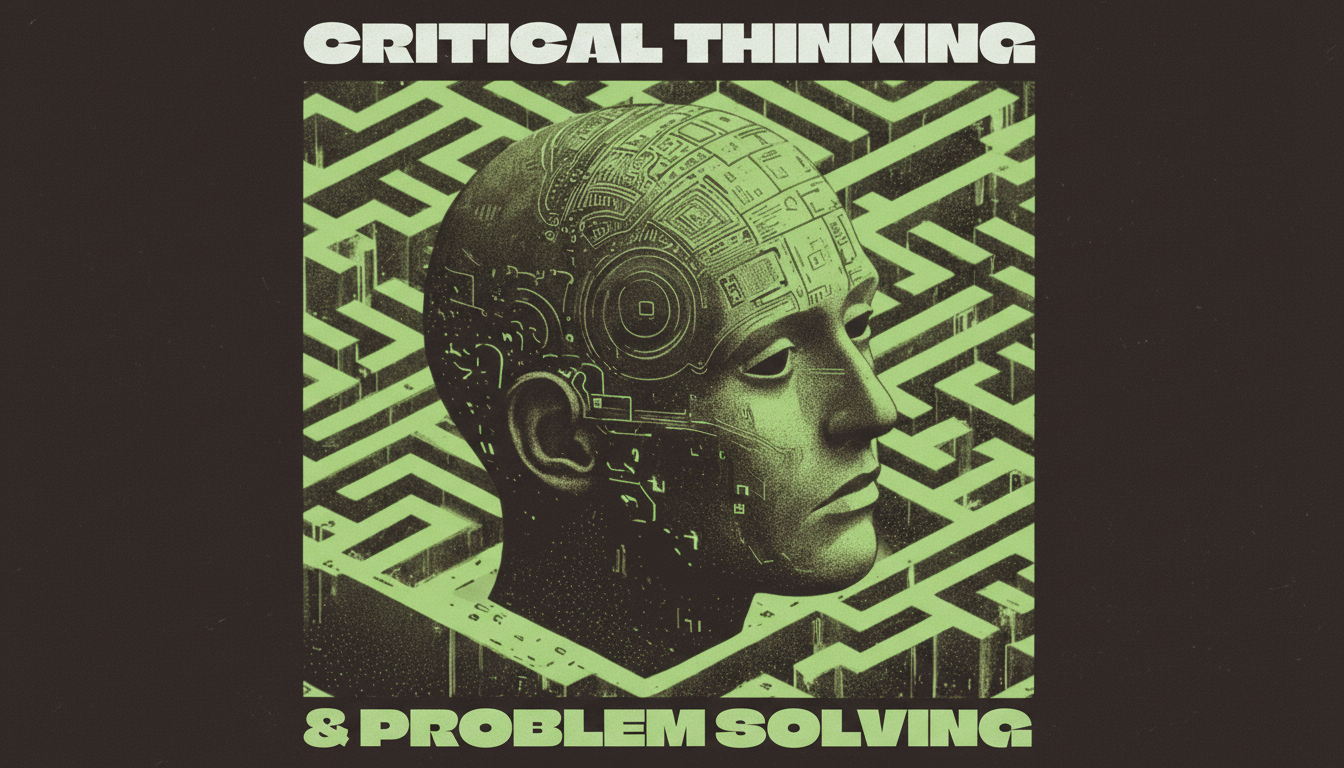
Critical Thinking & Problem Solving eBook (Digital Download): Smarter Decisions, Brain Teasers, and Everyday Life Skills
Better decisions rarely come from having more information—more often they come from having a clearer process. This digital download eBook focuses on practical critical thinking and problem-solving habits, reinforced through brain teasers and real-life scenarios, so choices feel less reactive and more reasoned at work, at home, and under pressure.
What this eBook helps build
Critical thinking isn’t a personality trait—it’s a set of repeatable behaviors. The Critical Thinking & Problem Solving eBook – Digital Download Guide for Smarter Decision Making, Brain Teasers & Life Skills Ebook is designed to strengthen the foundations that make everyday choices clearer and more consistent.
- Clear problem definitions: separating symptoms from root causes before acting
- Structured thinking: using repeatable steps instead of relying on mood or urgency
- Bias awareness: catching common mental shortcuts that distort judgment (like confirmation bias)
- Option generation: expanding solutions beyond the first “obvious” answer
- Decision confidence: making choices with fewer regrets and better follow-through
When critical thinking matters most in everyday life
Some decisions are loud and dramatic; most are quiet, frequent, and surprisingly costly when repeated. Practicing a small set of reasoning tools can upgrade the outcomes of dozens of daily moments.
- Money decisions: comparing alternatives, spotting hidden costs, and avoiding sunk-cost traps
- Work and school: prioritizing tasks, testing assumptions, and communicating reasoning clearly
- Relationships: reducing misunderstandings by checking interpretations against evidence
- Health and habits: evaluating claims, separating correlation from causation, and choosing sustainable changes
- Digital life: recognizing misleading headlines, emotional manipulation, and incomplete information
Even with good intentions, decision-making is limited by time, attention, and uncertainty—constraints often discussed as bounded rationality. A practical framework helps you work with those limits instead of being ruled by them.
A simple problem-solving loop to practice
A reliable loop reduces overwhelm because it tells you what to do next—especially when stakes feel high. Use this sequence for anything from planning a week to handling a conflict or choosing between competing priorities.
- Name the problem: write a one-sentence statement that includes what’s happening, to whom, and when
- Clarify the goal: define what “better” looks like and what constraints cannot be changed
- List facts vs. assumptions: mark what is known, what is guessed, and what needs verification
- Generate options: aim for at least 3 paths, including one that challenges the default approach
- Test consequences: consider short-term and long-term outcomes, second-order effects, and risks
- Choose and commit: decide, set a checkpoint date, and define what evidence would trigger a pivot
Quick decision checkpoints
| Checkpoint | Question to ask | Why it helps |
|---|---|---|
| Clarity | What exactly is the decision? | Prevents solving the wrong problem |
| Evidence | What would change the conclusion? | Reduces overconfidence |
| Trade-offs | What is being given up? | Reveals real cost |
| Reversibility | Can this be undone later? | Guides how much analysis is needed |
| Next step | What is the smallest safe action? | Turns thinking into progress |
For deeper root-cause exploration, many people also benefit from a visual “cause-and-effect” approach (often called an Ishikawa diagram), outlined by NIST/SEMATECH.
How brain teasers sharpen real-world reasoning
Brain teasers aren’t just entertainment—they’re low-stakes reps for high-stakes thinking. The key is treating puzzles as practice for process, not as a score of “smart vs. not smart.”
- Pattern recognition: spotting structures that repeat across different problems
- Constraint handling: learning to work within limits instead of wishing them away
- Working memory discipline: holding only the useful pieces, not every detail
- Error checking: building the habit of validating steps before locking in an answer
- Comfort with uncertainty: staying calm while testing possibilities
Over time, this kind of practice can reduce “mental flailing”—those moments when the mind jumps between ideas without verifying assumptions or mapping consequences.
Practical ways to use the eBook week by week
Consistency matters more than marathon study sessions. A light, repeatable routine is often enough to create noticeable shifts in how decisions feel and how reliably you follow through.
If stress is a frequent trigger, pairing the eBook with a short reflection practice can make the thinking tools easier to access in the moment. The Mindful Clarity: Journal & Prompts | Printable Journal with Daily Mindfulness Prompts, Gratitude Exercises & Reflective Quotes for Mental Well-Being works well as a companion for decision logs, self-checks, and post-decision debriefs.
Who this digital download is best for
It’s also a smart fit for goal-setters and self-starters who are exploring new income paths and want cleaner decision filters. For example, pairing stronger reasoning habits with idea generation can complement resources like Top 50 Side Hustles That Actually Pay | Digital Download PDF eBook | Side Hustle Ideas That Make Money | Gig Economy & Passive Income, helping you compare trade-offs and test assumptions before investing time.
Digital download details and a simple setup
FAQ
Is this eBook suitable for beginners who feel “not good at logic puzzles”?
Yes. It’s built to develop skills step-by-step, with practice and explanations that focus on reasoning habits rather than “being naturally good” at puzzles.
How quickly can the techniques improve everyday decision making?
Small improvements often show up within a week of consistent use, especially when you use the checkpoints table. Stronger, more reliable results typically build over a few weeks with a simple decision log and repeatable review.
Can this be used for work and school, not just personal growth?
Yes. The same tools apply to troubleshooting, prioritizing tasks, evaluating options, and communicating your rationale clearly in projects, meetings, and studying.











Leave a comment