Mindful Clarity Printable Journal: 5–15 Min Daily Reset
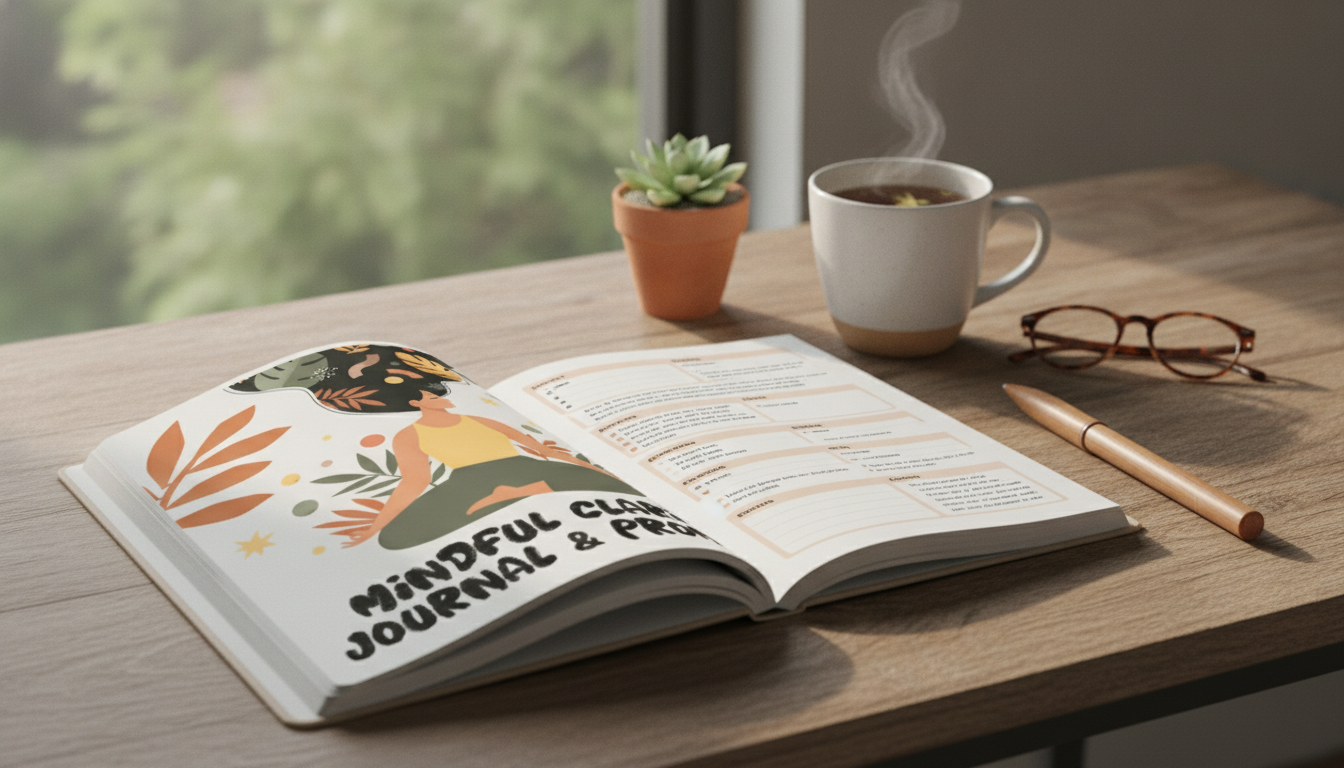
Mindful Clarity: A Printable Journal for Daily Mindfulness, Gratitude, and Reflection
A consistent journaling routine can help slow racing thoughts, notice what matters, and build steadier emotional habits. Mindful Clarity is a printable journal that blends short daily mindfulness check-ins with gratitude exercises and reflective quotes—designed to fit into real life in about 5–15 minutes a day. Because it’s printable, you can keep it flexible: repeat your favorite page, print only the week you need, and make the practice feel approachable instead of overwhelming.
What “Mindful Clarity” Supports Day to Day
- Creates a simple pause point to notice thoughts, feelings, and body cues without judgment.
- Helps organize mental clutter by turning vague stress into clear, nameable themes.
- Builds a practical gratitude habit that goes beyond “good things” into meaning and values.
- Uses brief reflective quotes as a gentle reframe when motivation is low.
- Works as a printable format: reuse pages, print only what is needed, and customize by week.
This kind of structured reflection pairs well with evidence-based mindfulness basics, like bringing attention back to the present moment and practicing acceptance. For background on mindfulness approaches, see the NHS overview of mindfulness. For why gratitude can be beneficial for well-being, the American Psychological Association’s resource on gratitude is a helpful starting point.
What’s Inside the Printable Journal
- Daily mindfulness prompts that guide attention to breath, sensations, environment, and inner dialogue.
- Gratitude exercises that encourage specificity (people, moments, strengths, and small wins).
- Reflection spaces to connect patterns over time (triggers, supports, and helpful choices).
- Short quotes for perspective—useful as a reset before writing or as a closing thought.
- Printable pages that can be used as a morning routine, evening wind-down, or mid-day check-in.
If you enjoy having structure (but not a rigid schedule), a printable set helps you tailor the routine. Some days need a quick reset; other days benefit from a longer page that captures context and next steps.
A 7-Day Starter Routine (5–15 Minutes)
Starting is often the hardest part. A one-week “starter loop” builds familiarity without demanding perfection. Try this progression:
- Day 1: Start small—answer one mindfulness prompt and list one specific gratitude detail.
- Day 2: Add a body scan note—where tension sits and what eases it.
- Day 3: Identify one repeating thought loop and name a kinder alternative.
- Day 4: Choose a quote and write one paragraph about how it applies today.
- Day 5: Track one mood shift—what happened right before it changed.
- Day 6: Write a “support menu” (music, movement, a call, sunlight, hydration) and pick one.
- Day 7: Review the week and circle patterns: what drained energy, what restored it.
Quick Daily Flow Options
| Time Available | Do This | Best For |
|---|---|---|
| 5 minutes | One mindfulness prompt + one gratitude line | Busy days, quick reset |
| 10 minutes | Mindfulness prompt + gratitude exercise + one reflection question | Building consistency |
| 15 minutes | Full page + quote reflection + one small action for tomorrow | Deeper clarity and planning |
Ways to Use the Pages for Different Needs
- For anxiety spirals: focus on “what is true right now” and write a single next step (small enough to do in under 10 minutes).
- For low mood: use gratitude prompts that highlight support, effort, and resilience rather than positivity pressure.
- For burnout: reflect on boundaries—what is being carried that can be shared, delayed, or simplified.
- For decision fatigue: write two columns—“what matters” and “what is noise”—then choose one priority.
- For emotional regulation: label feelings precisely (e.g., disappointed, overstimulated, uncertain) to reduce overwhelm.
When mindfulness feels abstract, it can help to anchor it in a practical routine: notice, name, choose. Notice what’s happening in your body and thoughts, name the most accurate emotion, then choose one supportive action. For an overview of meditation and mindfulness research and common approaches, the National Center for Complementary and Integrative Health provides a clear summary.
Printing and Setup Tips (So It Actually Gets Used)
- Print a 7–14 day batch instead of the whole file to keep it approachable.
- Keep the journal visible: on a nightstand, desk corner, or by the kettle/coffee station.
- Pair it with an existing habit: after brushing teeth, before screens, or after lunch.
- Use a simple rating scale for mood/energy so trends are easy to spot later.
- If consistency is tough, repeat the same page for a week; mastery beats variety.
A small setup detail can make a big difference: keep a pen clipped to the pages, and decide ahead of time when you’ll write. When your brain doesn’t have to negotiate the “when,” it’s easier to follow through.
Shop Printable Tools to Support Your Routine
If you want a ready-to-print structure that blends mindfulness, gratitude, and reflection, start here: Mindful Clarity: Journal & Prompts (Printable). It’s designed for everyday use—quick on busy days, deeper when you have more time.
For seasons of life where mental load is higher and self-care needs to be extra practical, a companion download can help you simplify and stabilize routines: First-Time Parent Survival Guide (Digital Download).
When to Seek Extra Support
- If journaling brings up intense distress, panic, or persistent hopelessness, consider reaching out to a qualified mental health professional.
- Use the journal as a complement to care: bring patterns and notes to therapy or coaching sessions.
- Keep the practice gentle—clarity grows faster with consistency than with pushing too hard.
The goal isn’t to “fix” everything on paper. It’s to create a steady place to check in, understand what’s happening, and choose one small step that supports you.
FAQ
What is a clarity journal?
A clarity journal is a guided way to notice thoughts and emotions, identify patterns over time, and turn reflection into small, realistic actions. Mindfulness prompts help you observe what’s happening right now, and gratitude prompts add balance by highlighting support, meaning, and personal strengths.










Leave a comment